
 Video Editor
 Aluminium Welder
 House keeping
 Back Office Executive
 Showroom Sales
 Collection Executive
 Showroom Incharge
 Robot Operator and Programming
 Hotel Manager
 CookChef
.png) Shift supervisor
Shift supervisor Journal Research
 Technical Project Lead
 IT Sales Executive
 Real estate - Sales Representative
 Real estate - Telecalling Executive
 Project Coordinator
 ITI Fitter Electricians
 Quantity Manager
 Safety Officer
 Maintenance - Electrical
 Maintenance - Mechanical
 Production Manager
 New Product Development
 Loan - Sales Office
 Area Sales Manager
 Mig Welder
 Tig Welder
 Arc Welder
 Panel Wiring
 PCB Design
 PCB Board Soldering
 Embedded
.png) Purchase Officer
Purchase Officer PLC Programmer
.png) Service co ordinator
Service co ordinator DTP Designer
 Bakery Assistant
.png) Service Advisor
Service Advisor Fiber Engineer
 Networking Engineer
 Hardware Engineer
 Night Shift Supervisor
 Word Press Developer
 Technical Assist
 Medical Laboratory
 Interior Designer
 Driver
 Painter
 House Keeping Supervisor
 Site Incharge
 Java Developer
 Security Guard
 Boat Crew
 Powder Coating
 Office Boy
 Delivery Executive
 Office Peon
 Food Beverage server
 Cashier
 Room Attender
 Receptionist
  Assembly Engineer
 Accounts in SAP
 Admission Counselor
 Flexographic Printer
 Civil surveyor
 Senior Web Developer
 Domestic Voice Process
 Admin Executive
 Wood Cutter
 Voice Process
 Mechanical Designer
 Field Marketing
 Draftsman
 VMC Operator
 CNC Operator
 HMC Operator
 VTL Operator
  Setter Cum Programmer VMC CNC HMC VTL
  SoftWare Developer
  Software Testing
 SAP Entries
 SEO Executive
 Digital Marketing Executive
 Senior SEO Executive
 Production Incharge
 Dispatch
  Store Incharge
 Store Keeper
 Business Development Executive
.png) Tele Calling Executive
Tele Calling Executive Sales Executive
 Accounts Finance
 Senior HR Manager
 Admin Cum Sales
 Admin Cum Accounts
 Site Engineer
 Architectural
 Interior Architect
 Interior Site Engineer
  Helper
 Welder
 Quality Control
 Purchase Executive
 Quality Line Inspection
 Data Entry
 Data Analyst
 Quantity surveyor
 International voice process
  Accounts Executive
  Senior Accountant
 Site supervisor
  Business Advisor
  HR Recruiter
 HR - Payroll
 Team Leader
.png) Lab view
Lab view House keeping assistant
 Wiring Technicians
 Graphic Designer
 Database Engineer
 Process Associate
 Sales Coordinator
 Lecturer
 Data Entry Operator DEO
 Data Entry Executive
 Customer Support Executive
.png) Customer service Representative
Customer service Representative Client Relationship Executive
 AR Caller
  Call Centre
 Non Voice Executive
 Technician
  Assembly
  Project Manager
 Supervisor
 Service Technician
 HR Manager Admin
 Logistics
 Front Office Executive
 Global Brave Solutions
What Do Employers Expect From Employees? A Guide for Better Hiring in India
What Do Employers Expect From Employees?
Employers expect employees to combine job-specific skills with communication, problem-solving, adaptability, teamwork, reliability, and a willingness to learn.
First, technical qualifications still matter because employees need the knowledge required to perform their specific roles. For example, a software developer may need programming skills, while an accountant may need accounting software and financial reporting knowledge.
At the same time, employers increasingly evaluate how candidates apply their knowledge in real situations. The World Economic Forum's Future of Jobs Report 2025 identifies analytical thinking as the leading core skill, with around seven in ten surveyed companies considering it essential.
Moreover, work experience continues to be an important hiring signal. The same report found that 81% of businesses expect to continue using work experience as an assessment mechanism during 2025–2030.
For employers, this means a strong candidate is not necessarily the person with the longest resume. A strong candidate is someone who can demonstrate relevant skills, apply them effectively, work with others, and continue developing.
Why Do Employer Expectations Matter for Hiring in India?
Employer expectations matter because hiring decisions increasingly depend on whether a candidate can contribute to changing business requirements rather than simply meet a fixed list of qualifications.
First, Indian businesses are adapting to technologies such as artificial intelligence, automation, data platforms, and digital communication. The World Economic Forum reports that Indian employers expect increased digital access, climate-related changes, and geopolitical developments to influence business transformation through 2030.
Moreover, 67% of companies operating in India surveyed by the World Economic Forum expect to tap diverse talent pools, while 30% expect skills-based hiring through approaches such as removing some degree requirements.
At the same time, employees need to keep learning after joining an organization. The World Economic Forum estimates that 63 out of every 100 workers in India will require training by 2030, highlighting the importance of upskilling and reskilling.
For example, an employee hired for a digital marketing position may initially work mainly with search optimization and social media, but later need to use AI tools, analytics platforms, automation, and new content workflows.
What Skills Do Employers Look For in Employees?
Employers generally look for a combination of technical skills, cognitive abilities, people skills, and professional behaviours rather than one skill in isolation.
1. Communication Skills
Communication skills help employees explain ideas, understand instructions, collaborate with colleagues, and interact with customers.
First, effective communication includes more than speaking confidently. It also includes writing clear emails, asking relevant questions, listening carefully, presenting information, and communicating problems before they become larger issues.
For example, a customer-support employee may know the product well but still struggle if they cannot explain a solution clearly to a customer.
LinkedIn's 2025 research on small-business leaders in India identified communication as the most valued people skill, followed by creative thinking, innovative thinking, adaptability, and collaboration.
2. Problem-Solving Skills
Problem-solving skills allow employees to identify issues, understand their causes, evaluate possible solutions, and take appropriate action.
Moreover, employers value employees who can approach problems independently instead of immediately waiting for someone else to provide every answer.
For example, if an employee notices that a recurring report contains incorrect data, a problem-solving approach would involve identifying where the error occurs, checking the source, correcting the process, and communicating the solution.
3. Adaptability and Flexibility
Adaptability is the ability to adjust when responsibilities, technology, processes, or business priorities change.
First, this matters because employees may work with new software, new customers, new managers, or changing business processes during their careers. The World Economic Forum identifies resilience, flexibility, and agility among the leading core skills employers value. — Source: World Economic Forum, 2025
For example, an employee who learns a newly introduced project-management platform instead of refusing to change can help the team transition more smoothly.
4. Teamwork and Collaboration
Teamwork allows employees to contribute effectively while working with people who have different responsibilities, personalities, and expertise.
Moreover, collaboration involves sharing information, respecting different viewpoints, completing assigned work, and helping the team achieve a shared objective.
For example, launching a new website may require developers, designers, content writers, marketers, and sales teams to coordinate their work.
Employers need people who can perform independently without becoming disconnected from the team.
5. Technical and Digital Skills
Technical skills give employees the ability to perform the practical requirements of their roles.
First, the exact skills depend on the position. A graphic designer may need design software, a developer may need programming languages, and a sales executive may need CRM and communication tools.
At the same time, basic digital literacy is becoming relevant across many roles. The World Economic Forum identifies technological literacy among the important core skills for today's workforce, while AI and big data are among the fastest-growing skill areas.
For example, an HR professional may not need to become a programmer, but understanding recruitment software, analytics, AI-assisted workflows, and digital collaboration tools can improve productivity.
6. Creativity and Innovative Thinking
Creativity helps employees generate new approaches instead of relying only on established methods.
Moreover, innovative thinking is useful when a business needs to improve a process, develop a product, solve a customer problem, or differentiate itself from competitors.
For example, a marketing employee might identify a new content format that reaches a specific audience more effectively than an existing campaign.
LinkedIn's India-focused 2025 Skills on the Rise research highlighted creativity and innovation among skills professionals and employers were increasingly focused on.
7. Leadership and Ownership
Leadership is not limited to managers because employees can demonstrate leadership by taking responsibility, making thoughtful decisions, supporting colleagues, and moving projects forward.
First, ownership means treating assigned work as a responsibility rather than simply completing individual tasks.
For example, an employee who notices a customer issue and coordinates with the relevant teams to resolve it demonstrates ownership even without having a managerial title.
The World Economic Forum lists leadership and social influence among the leading core skills identified by employers.
8. Reliability and Professionalism
Reliability means consistently meeting responsibilities, communicating clearly, respecting deadlines, and maintaining professional standards.
Moreover, employers need employees who can be trusted with important tasks without constant supervision.
For example, if an employee knows a deadline cannot be met, communicating the problem early gives the manager an opportunity to adjust priorities or resources.
Professional reliability builds trust between employees, managers, customers, and teams.
9. Continuous Learning
Continuous learning is the willingness to develop new knowledge and skills as job requirements evolve.
First, employees should not assume that their current skills will remain sufficient throughout their careers. The World Economic Forum estimates that 39% of workers' existing core skill sets are expected to change or become outdated by 2030. — Source: World Economic Forum, 2025
For example, a content writer may need to learn analytics, AI-assisted workflows, search optimization, and new publishing tools as the digital marketing environment changes.
Continuous learning therefore benefits both employees and employers.
Which Soft Skills Do Employers Expect From Employees?
Soft skills are workplace behaviours that help employees communicate, collaborate, solve problems, and adapt effectively.
First, the most useful soft skills vary by role, but employers commonly value:
Moreover, LinkedIn's 2025 India research found that more than 88% of Indian companies surveyed agreed that people skills are even more important in the age of AI.
This illustrates an important hiring principle: technology may change how work is performed, but human interaction remains important in many roles.
What Technical Skills Do Employers Expect From Employees?
Technical skills are role-specific capabilities that allow employees to perform the practical requirements of their jobs.
First, employers should define technical requirements according to the actual work rather than adding every possible skill to a job description.
For example:
- Software development: Programming languages, databases, APIs, testing, and version control.
- Digital marketing: SEO, analytics, content platforms, advertising tools, and reporting.
- Accounting: Accounting software, financial reporting, taxation knowledge, and spreadsheets.
- Sales: CRM platforms, prospecting, negotiation, presentation, and customer management.
- Human resources: Recruitment platforms, HR systems, interviewing, employee documentation, and people management.
- Customer support: Product knowledge, communication tools, ticketing systems, and customer-service processes.
Moreover, employers should distinguish between must-have skills and trainable skills. Requiring too many skills can reduce the candidate pool unnecessarily.
The World Economic Forum reports that 48% of employers globally expect to use skills assessments during 2025–2030, showing the growing role of direct competency evaluation.
Do Employers Value Experience More Than Qualifications?
Employers often consider both qualifications and experience, but the importance of each depends on the role and organization.
First, qualifications can demonstrate foundational knowledge and preparation for a profession. For regulated or specialized roles, specific educational credentials may also be essential.
At the same time, practical experience can show whether a candidate knows how to apply that knowledge in a real workplace. The World Economic Forum reports that 81% of businesses expect work experience to remain an assessment mechanism during 2025–2030
For example, an employer hiring a junior developer may evaluate educational background, coding ability, projects, internships, and practical assessments rather than relying on a degree alone.
This is why skills-based hiring can complement traditional qualification-based hiring when the role allows it.
How Can Employers Identify the Skills They Need?
Employers can identify required skills by starting with the actual responsibilities of the position and converting those responsibilities into measurable competencies.
First, define what the employee must accomplish. Then identify the technical, behavioural, and interpersonal skills required to achieve those outcomes.
A practical process includes:
- Define the job outcomes.
- List essential technical skills.
- Identify important soft skills.
- Separate must-have skills from trainable skills.
- Define the required experience level.
- Create practical assessment criteria.
- Use structured interview questions.
- Evaluate candidates against the same core criteria.
For example, instead of writing “good communication skills,” an employer could define the requirement as “able to explain technical information clearly to non-technical customers.”
That approach makes the expectation easier to understand and easier to assess.
How Should Employers Write a Job Description Based on Employee Expectations?
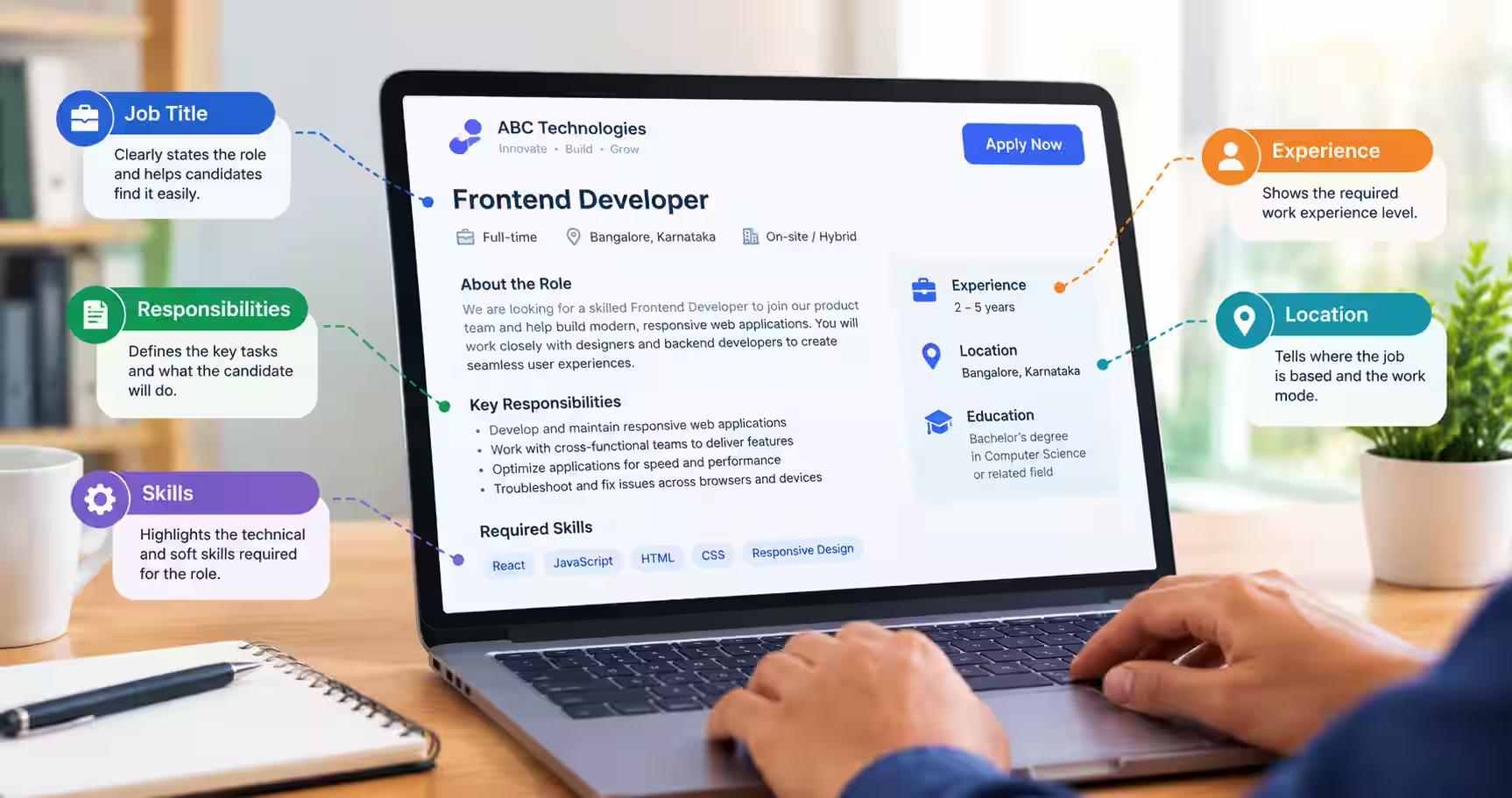
An effective job description should clearly communicate the role, responsibilities, required skills, qualifications, experience, and expectations.
First, use a specific job title that candidates can easily understand and search for. Avoid vague titles such as “Rockstar,” “Growth Ninja,” or “All-Rounder” when a conventional job title would be clearer.
Next, organize the job description into practical sections:
- Job title
- Company introduction
- Role summary
- Key responsibilities
- Required skills
- Preferred skills
- Experience
- Education or certifications
- Location and work mode
- Salary or benefits, where appropriate
- Application instructions
Moreover, distinguish between essential requirements and preferred qualifications. This can prevent suitable candidates from rejecting themselves because they do not meet a non-essential requirement.
For employers looking to reach candidates in India, GlobalJobs.co.in can be included as part of a broader job-posting strategy.
How Can Employers Assess Whether a Candidate Meets Their Expectations?
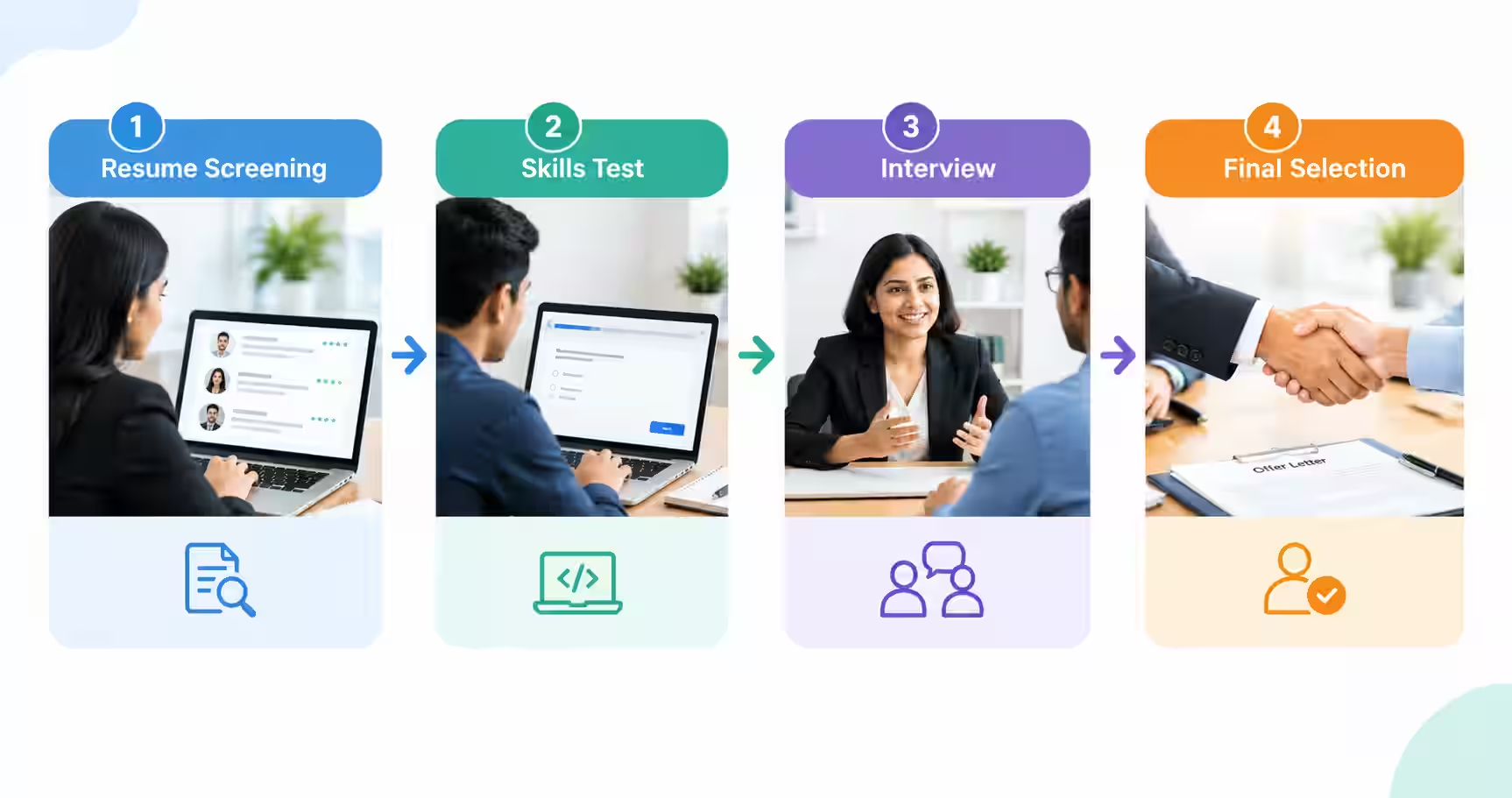
Employers can assess candidate fit by combining resume screening, structured interviews, practical assessments, and role-specific evaluation.
First, the assessment should match the actual work. A candidate applying for a writing position could complete a short writing task, while a developer could complete a coding exercise.
A practical assessment framework can include:
Moreover, structured evaluation can make comparisons more consistent because candidates are assessed against predefined criteria rather than general impressions.
What Tools Can Employers Use to Find and Evaluate Candidates?
Employers can use job portals, applicant tracking systems, skills assessments, structured interview templates, and recruitment analytics to improve hiring workflows.
First, job portals help employers publish vacancies and reach active job seekers. For example, businesses can use GlobalJobs.co.in to explore job opportunities and incorporate online job posting into their recruitment process.
Second, applicant tracking systems can organize applications and support recruitment workflows. Third, skills assessment platforms can help employers test practical capabilities before making a final decision.
Employers can also use simple tools such as spreadsheets, structured interview forms, and standardized scoring criteria when a full recruitment platform is unnecessary.
The important point is to choose tools based on the hiring problem, not simply the number of features available.
What Should Employers Look for Beyond a Candidate's Resume?
Employers should look beyond resumes to understand how candidates think, communicate, solve problems, and apply their skills.
First, ask candidates about specific situations rather than relying only on general questions. Questions such as “Tell us about a time you solved a difficult problem” can reveal more useful information than asking whether someone considers themselves a problem solver.
Moreover, employers can examine:
- Relevant projects
- Portfolio work
- Internships
- Certifications
- Practical assessments
- Previous achievements
- Communication during interviews
- Approach to unfamiliar problems
- Ability to learn new tools
- Collaboration examples
For example, a recent graduate may have limited full-time experience but could demonstrate relevant ability through projects, internships, volunteer work, or practical assessments.
This approach can help employers identify potential while maintaining clear role-specific standards.
What's Next? How Can Employers Improve Their Hiring Process?
Employers can improve hiring by turning broad expectations into specific, measurable criteria before advertising a vacancy.
First, review each open position and ask five practical questions:
- What must this employee accomplish?
- Which technical skills are essential?
- Which people skills are important for the role?
- Which requirements can be learned after joining?
- How will we objectively assess each requirement?
Next, create a clear job description and publish it through relevant recruitment channels. Employers can use GlobalJobs.co.in as one channel for connecting job opportunities with candidates in India.
Finally, review hiring outcomes regularly. If candidates consistently struggle with a particular skill after joining, the employer may need to improve either the hiring criteria, assessment process, onboarding, or training programme.
Conclusion
Employers expect employees to bring more than qualifications to the workplace. Technical ability, communication, analytical thinking, problem-solving, adaptability, collaboration, ownership, and continuous learning increasingly work together to determine how effectively an employee can contribute.
Moreover, employer expectations are changing as Indian businesses adopt AI, digital technologies, and new ways of working. The World Economic Forum's 2025 research shows that skills disruption, technological literacy, analytical thinking, and continuous learning are becoming increasingly important across the workforce
For employers, the practical lesson is simple: define the skills the role genuinely requires, assess candidates against those skills, and remain open to candidates who demonstrate potential and relevant capabilities.
For job seekers, understanding these expectations can help you improve your resume, prepare for interviews, build relevant skills, and present your experience more effectively.
Whether you're hiring your next employee or preparing for your next opportunity, the strongest starting point is knowing exactly what the role requires and being able to demonstrate those capabilities clearly.