
 Video Editor
 Aluminium Welder
 House keeping
 Back Office Executive
 Showroom Sales
 Collection Executive
 Showroom Incharge
 Robot Operator and Programming
 Hotel Manager
 CookChef
.png) Shift supervisor
Shift supervisor Journal Research
 Technical Project Lead
 IT Sales Executive
 Real estate - Sales Representative
 Real estate - Telecalling Executive
 Project Coordinator
 ITI Fitter Electricians
 Quantity Manager
 Safety Officer
 Maintenance - Electrical
 Maintenance - Mechanical
 Production Manager
 New Product Development
 Loan - Sales Office
 Area Sales Manager
 Mig Welder
 Tig Welder
 Arc Welder
 Panel Wiring
 PCB Design
 PCB Board Soldering
 Embedded
.png) Purchase Officer
Purchase Officer PLC Programmer
.png) Service co ordinator
Service co ordinator DTP Designer
 Bakery Assistant
.png) Service Advisor
Service Advisor Fiber Engineer
 Networking Engineer
 Hardware Engineer
 Night Shift Supervisor
 Word Press Developer
 Technical Assist
 Medical Laboratory
 Interior Designer
 Driver
 Painter
 House Keeping Supervisor
 Site Incharge
 Java Developer
 Security Guard
 Boat Crew
 Powder Coating
 Office Boy
 Delivery Executive
 Office Peon
 Food Beverage server
 Cashier
 Room Attender
 Receptionist
  Assembly Engineer
 Accounts in SAP
 Admission Counselor
 Flexographic Printer
 Civil surveyor
 Senior Web Developer
 Domestic Voice Process
 Admin Executive
 Wood Cutter
 Voice Process
 Mechanical Designer
 Field Marketing
 Draftsman
 VMC Operator
 CNC Operator
 HMC Operator
 VTL Operator
  Setter Cum Programmer VMC CNC HMC VTL
  SoftWare Developer
  Software Testing
 SAP Entries
 SEO Executive
 Digital Marketing Executive
 Senior SEO Executive
 Production Incharge
 Dispatch
  Store Incharge
 Store Keeper
 Business Development Executive
.png) Tele Calling Executive
Tele Calling Executive Sales Executive
 Accounts Finance
 Senior HR Manager
 Admin Cum Sales
 Admin Cum Accounts
 Site Engineer
 Architectural
 Interior Architect
 Interior Site Engineer
  Helper
 Welder
 Quality Control
 Purchase Executive
 Quality Line Inspection
 Data Entry
 Data Analyst
 Quantity surveyor
 International voice process
  Accounts Executive
  Senior Accountant
 Site supervisor
  Business Advisor
  HR Recruiter
 HR - Payroll
 Team Leader
.png) Lab view
Lab view House keeping assistant
 Wiring Technicians
 Graphic Designer
 Database Engineer
 Process Associate
 Sales Coordinator
 Lecturer
 Data Entry Operator DEO
 Data Entry Executive
 Customer Support Executive
.png) Customer service Representative
Customer service Representative Client Relationship Executive
 AR Caller
  Call Centre
 Non Voice Executive
 Technician
  Assembly
  Project Manager
 Supervisor
 Service Technician
 HR Manager Admin
 Logistics
 Front Office Executive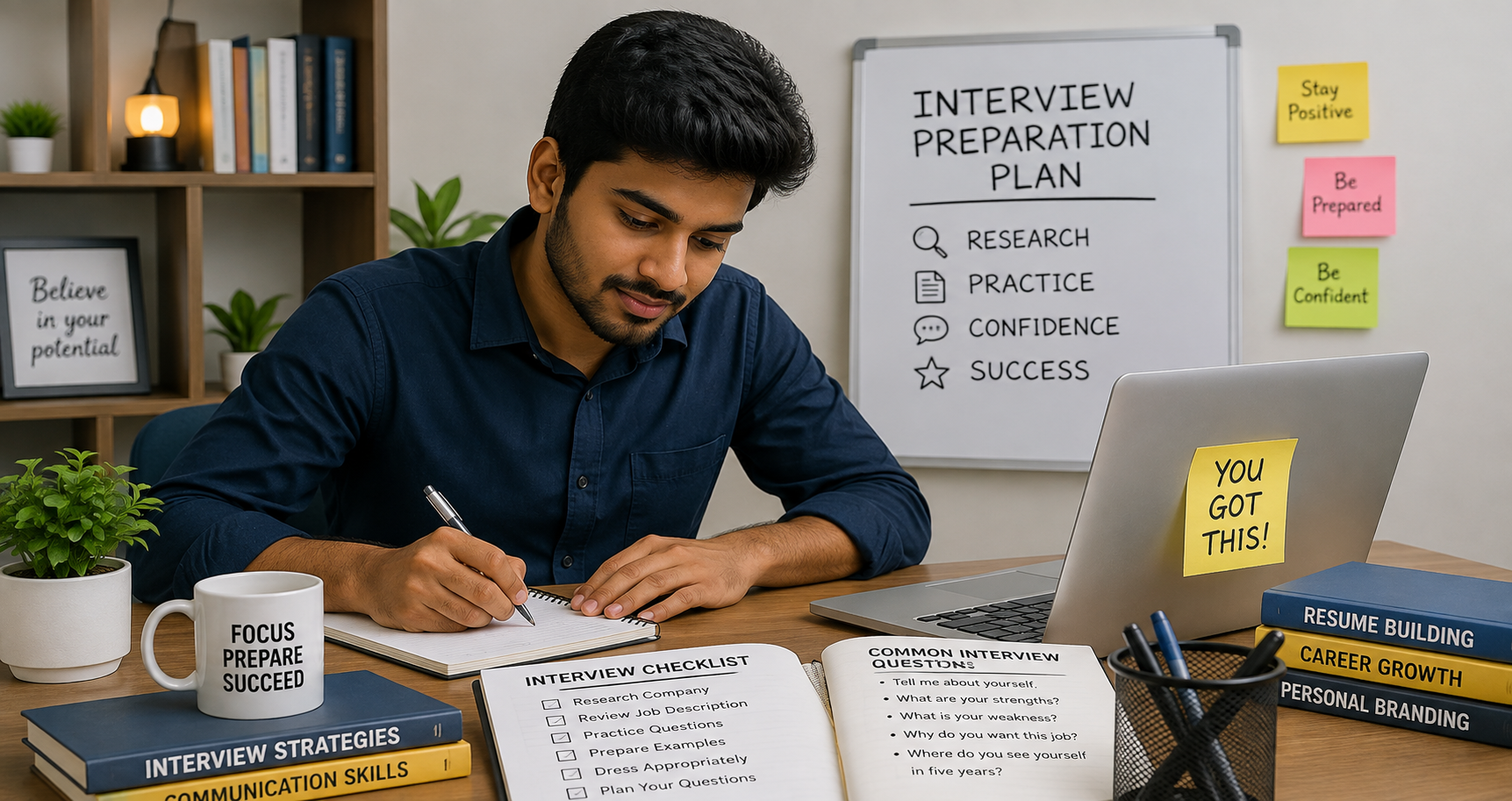
 Global Brave Solutions
How to Prepare for a Job Interview in 2026: The Complete Step-by-Step Guide
Preparing for a job interview is more than memorizing answers. Employers in 2026 assess your skills, communication, problem-solving ability, adaptability, and cultural fit. The best way to succeed is to research the company, understand the role, practice common interview questions, prepare examples using the STAR method, and present yourself confidently. This guide provides a complete interview preparation roadmap to help you stand out and improve your chances of getting hired.
Why Interview Preparation Matters More Than Ever
The hiring process has evolved. Companies increasingly use AI-assisted screening, structured interviews, behavioral assessments, and virtual meetings before making hiring decisions.
Interviewers evaluate:
- Technical knowledge
- Communication skills
- Problem-solving ability
- Confidence
- Teamwork
- Learning mindset
- Professional attitude
- Cultural fit
Candidates who prepare thoroughly demonstrate professionalism and genuine interest in the role.
Step 1: Understand the Job Description
Your interview preparation should begin with the job description.
Identify:
- Required technical skills
- Key responsibilities
- Preferred qualifications
- Software or tools mentioned
- Industry knowledge expected
Highlight the keywords and think about how your experience, education, projects, or certifications align with them.
Pro Tip: Use the job description as a guide when preparing examples for interview questions.
Step 2: Research the Company
One of the most common interview questions is:
"What do you know about our company?"
Before your interview, research:
- Company mission and vision
- Products or services
- Target customers
- Industry
- Competitors
- Recent news
- Company values
- Leadership team
This demonstrates initiative and helps you tailor your answers.
Step 3: Review Your Resume Thoroughly
Interviewers often ask questions directly from your resume.
Be ready to explain:
- Academic projects
- Internships
- Work experience
- Certifications
- Technical skills
- Career transitions
- Employment gaps
- Achievements
Everything listed on your resume should be something you can confidently discuss.
Step 4: Practice the Most Common Interview Questions
Although every interview is unique, many questions appear consistently.
Tell me about yourself.
Focus on:
- Education
- Relevant experience
- Key skills
- Career goals
Keep your response concise (60–90 seconds).
Why do you want this job?
Mention:
- Interest in the role
- Company reputation
- Career growth
- Relevant skills
What are your strengths?
Choose strengths supported by real examples.
What is your biggest weakness?
Select a genuine weakness and explain how you're actively improving it.
Why should we hire you?
Highlight:
- Skills
- Results
- Learning ability
- Motivation
- Fit for the role
Step 5: Use the STAR Method for Behavioral Questions
Behavioral interview questions assess how you've handled real situations.
Use the STAR framework:
Situation
Describe the context.
Task
Explain your responsibility.
Action
Describe what you did.
Result
Share measurable outcomes whenever possible.
Example questions:
- Tell me about a challenge you faced.
- Describe a conflict in a team.
- Share a time you solved a problem.
- Tell me about a leadership experience.
The STAR method keeps your answers structured and memorable.
Step 6: Prepare for Technical Questions
If you're interviewing for a technical role:
- Review core concepts.
- Practice coding or problem-solving.
- Revise projects.
- Understand tools used in the role.
- Prepare to explain your thought process.
Don't just memorize answers—focus on demonstrating how you approach problems.
Step 7: Prepare Questions for the Interviewer
Most interviews end with:
"Do you have any questions for us?"
Good questions include:
- What does success look like in this role?
- What are the team's biggest priorities?
- What learning opportunities are available?
- How is performance evaluated?
- What are the next steps in the hiring process?
Avoid asking about salary or leave policies in the first interview unless the interviewer brings them up.
Step 8: Dress Professionally
Your appearance creates a first impression.
General guidelines:
- Wear clean, professional clothing suitable for the company's culture.
- Keep accessories minimal.
- Ensure good grooming.
- Choose comfortable, polished footwear.
For virtual interviews, ensure your upper attire looks professional and your background is tidy.
Step 9: Prepare Your Documents
Carry digital and printed copies of:
- Resume
- Cover letter (if applicable)
- Portfolio
- Certificates
- Identification
- References
- Notepad and pen
Having everything ready reduces stress on interview day.
Step 10: Prepare for Online Interviews
Virtual interviews remain common in 2026.
Checklist:
- Test your internet connection.
- Charge your laptop.
- Check your microphone and camera.
- Use headphones if needed.
- Join the meeting 10 minutes early.
- Close unnecessary applications.
- Keep your phone on silent.
Practice looking into the camera to maintain eye contact.
Step 11: Improve Your Body Language
Non-verbal communication can influence an interviewer's perception.
Remember to:
- Smile naturally.
- Sit upright.
- Maintain eye contact.
- Avoid crossing your arms.
- Use controlled hand gestures.
- Listen actively without interrupting.
Confident body language reinforces your verbal responses.
Step 12: Avoid Common Interview Mistakes
Common mistakes include:
- Arriving late
- Speaking negatively about previous employers
- Giving vague answers
- Interrupting the interviewer
- Failing to research the company
- Overusing jargon
- Not asking questions
- Forgetting to follow up
- Appearing distracted during online interviews
Preparation helps you avoid these pitfalls.
Step 13: Use AI to Prepare Smarter
AI tools can support your preparation by helping you:
- Practice mock interviews
- Improve answer clarity
- Review your resume
- Generate likely interview questions
- Research companies
- Improve communication skills
Use AI as a practice partner, but ensure your final answers reflect your genuine experiences and personality.
Step 14: Follow Up After the Interview
Within 24 hours, send a professional thank-you email.
Mention:
- Appreciation for the opportunity
- Interest in the role
- A brief reminder of why you're a good fit
- Thanks for the interviewer's time
A thoughtful follow-up reinforces your professionalism.
Job Interview Preparation Checklist
Before your interview, confirm that you have:
- Researched the company
- Reviewed the job description
- Practiced common interview questions
- Prepared STAR examples
- Updated your resume
- Selected professional attire
- Gathered required documents
- Tested technology (for virtual interviews)
- Planned your travel or login time
- Prepared questions for the interviewer
A checklist reduces last-minute stress and helps you stay organized.
Expert Tips to Impress Interviewers
Career experts consistently recommend these practices:
- Be authentic rather than over-rehearsed.
- Support your claims with real examples.
- Show enthusiasm for learning.
- Listen carefully before answering.
- Speak clearly and confidently.
- Admit when you don't know something, then explain how you would learn or solve it.
- Focus on the value you can bring to the organization.
Interviewers often remember candidates who communicate clearly, think logically, and demonstrate a positive attitude.
Final Thoughts
Successful interview preparation isn't about predicting every question—it's about developing the confidence and clarity to handle different situations professionally. By understanding the job description, researching the company, practicing structured answers, preparing thoughtful questions, and presenting yourself with confidence, you significantly improve your chances of receiving a job offer.
Whether you're a fresher attending your first interview or an experienced professional aiming for career growth, consistent preparation is one of the most valuable investments you can make. Continue refining your skills, learn from every interview, and stay updated with industry trends. Each interview is an opportunity to improve and move closer to your ideal role.
Frequently Asked Questions
How many days should I prepare for a job interview?
Ideally, begin preparing 3–7 days before the interview. Use this time to research the company, review your resume, practice interview questions, and prepare relevant examples.
What are the most common job interview questions?
Common questions include:
- Tell me about yourself.
- Why do you want this role?
- What are your strengths and weaknesses?
- Why should we hire you?
- Where do you see yourself in five years?
What is the STAR interview method?
The STAR method stands for Situation, Task, Action, and Result. It helps you answer behavioral interview questions with clear, structured examples from your experience.
How should I prepare for an online interview?
Test your internet connection, camera, and microphone, choose a quiet location, dress professionally, join early, and minimize distractions.
Is it okay to use AI for interview preparation?
Yes. AI can help you practice mock interviews, improve your answers, and identify areas for improvement. However, your responses should always be truthful and reflect your own experiences.
What should I do if I don't know the answer to a question?
Stay calm, acknowledge that you're unsure, explain your thought process, and describe how you would find the solution. Employers often value problem-solving and honesty over guessing.
How can I reduce interview nervousness?
Practice regularly, prepare structured answers, research the company thoroughly, conduct mock interviews, and arrive early. Familiarity with the process naturally builds confidence and reduces anxiety.